


Macro & Market Views
Securitization as a Strategic Focus
Securitization as a Strategic Focus
Diamond Hill
- A sizable portion of the fixed income opportunity set sits outside common benchmarks, creating room for active managers to uncover opportunities beyond the index.
- Securitized assets can offer meaningful diversification from traditional corporate credit. Exposure is spread across pools of underlying loans rather than tied to the financial health of a single issuer, while structural credit enhancements can provide additional protection against unexpected losses.
- The complexity and varied underlying collateral of securitized markets can create opportunities for differentiated positioning while maintaining a comparable risk profile.
- Managers with a long history of investing in securitized assets across market cycles may be better equipped to distinguish temporary dislocations from durable opportunities.
Interest in securitized assets has climbed steadily over the past decade, and for good reason.
Compared with traditional corporate debt, securitized assets can offer exposure to diversified pools of loans, structural protections and opportunities that extend well beyond the boundaries of widely used benchmarks.
That breadth matters. The US bond market is far larger than the Bloomberg US Aggregate Bond Index, leaving meaningful segments of mortgage- backed (MBS), asset-backed (ABS) and commercial mortgage-backed securities (CMBS) outside the benchmark. For active managers willing to look beyond the index, those areas can create fertile ground for bottom-up security selection and relative-value opportunities.
But access alone is not an advantage. Securitized markets are complex, and opportunities often emerge through dislocations that reward patience, experience and a deep understanding of the underlying collateral and deal structures. A manager’s history across market cycles can say far more than a snapshot allocation. In a market shaped by complexity, structural nuance and periodic stress, long-term, specialized experience can be a meaningful edge.
Growing Interest in Securitization Appears Deserved
It feels as though you can’t read an investment manager summary or white paper without encountering commentary on the virtues of investing in the securitized sector. As shown in Exhibit 1, a simple search on Google Trends shows a steady increase in interest in the term “securitization” over the past five to six years. We believe there is good reason for this interest, as securitized assets offer investors a differentiated value proposition relative to corporate debt.
Exhibit 1. Searches for “Securitization” Have Spiked in Recent Years
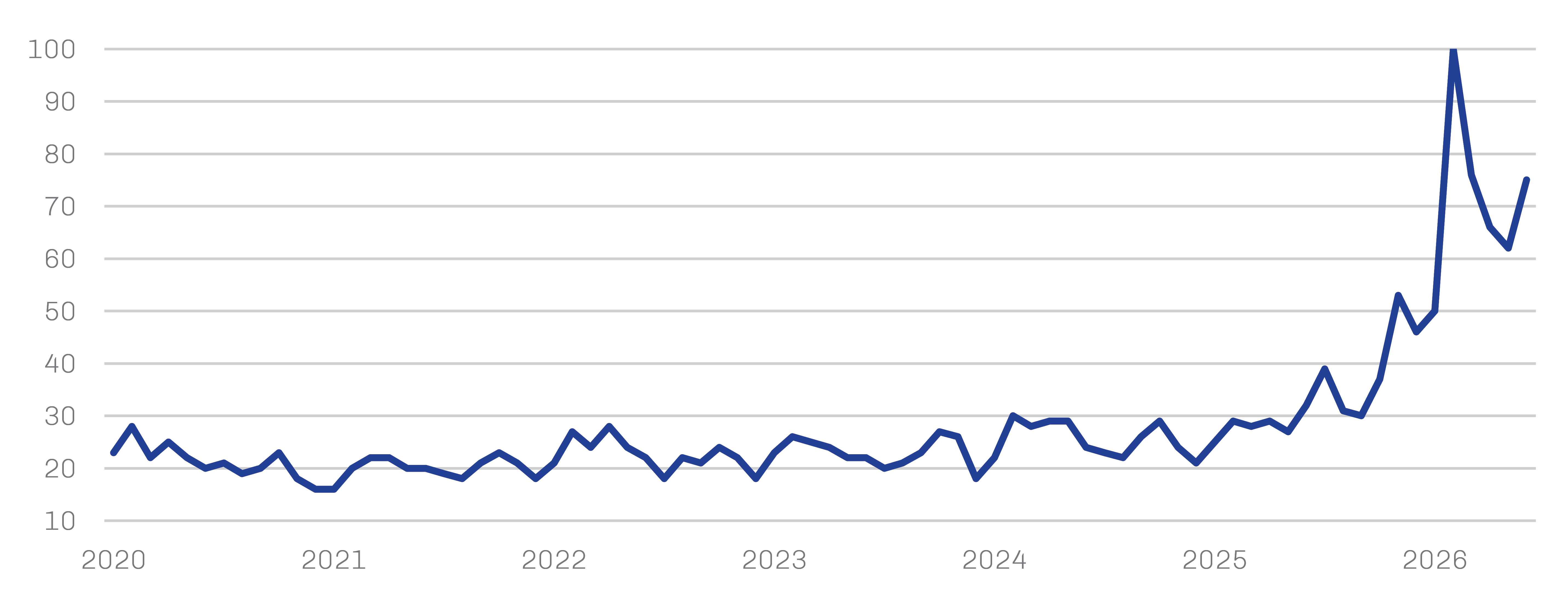
Note: The numbers represent search interest relative to the highest point on the chart for the selected region and time period. A value of 100, which reflects the reading for November 2025, represents peak popularity for the term; a value of 50 indicates the term is half as popular; and a score of 0 means there were not enough searches to register activity.
Source: Google; data as of July 31, 2026.
Corporate debt is relatively straightforward. Investors receive semiannual coupon payments from the issuer, and their returns are directly tied to the company’s financial health. That company-specific exposure can leave investors vulnerable to economic shifts, operational missteps and even corporate scandals.
Securitized assets work differently. Through a single security, investors gain exposure to a diversified pool of loans backed by consumers, businesses or commercial collateral. Because the underlying credit risk is spread across many borrowers, performance is not dependent on the fortunes of one company.
When issuers pool loans to structure an asset-backed deal, they build expected credit losses into the transaction. No underwriting process is perfect, and borrowers face many of the same life events and business pressures we all do—job changes, family obligations, divorce, relocation and other financial disruptions. Some of those events may lead to missed payments or losses, which is why securitized transactions are structured to account for an assumed level of loss from the outset.
Credit enhancements—ranging from tranching to overcollateralization to external letters of credit—provide an additional layer of protection when losses exceed those anticipated during underwriting. By helping absorb unexpected stress, these structural safeguards can support more resilient outcomes for investors.
Accessing Opportunities Outside the Benchmark
Within core bond strategies, active, benchmark-agnostic managers may find ample opportunities to add value through bottom-up security selection. Understanding that opportunity begins with knowing what common investment benchmarks include—and what they leave out.
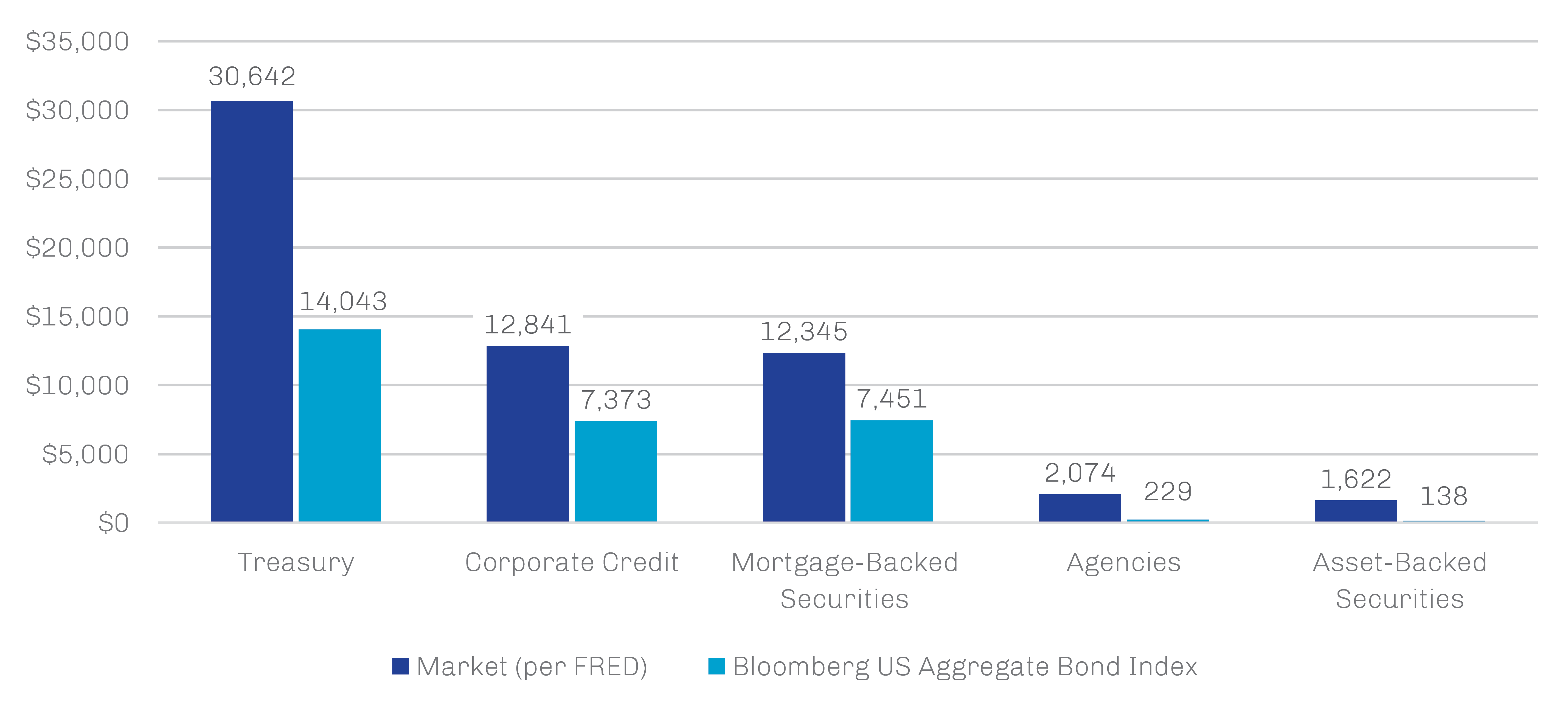
The core bond universe is vast, totaling nearly $60 trillion as of year-end 2025.1 By comparison, the widely used Bloomberg US Aggregate Bond Index represented just $29.2 trillion as of year-end 2025.2
Why the discrepancy? The index follows specific rules governing eligibility, inclusion and rebalancing, and securities must also meet sector-specific liquidity requirements. As a result, portions of the market that may offer value to active managers are excluded. Exhibit 2 highlights the index’s primary categories and the opportunities available outside the benchmark.
These limitations can create opportunities for active managers with the flexibility to invest beyond the index, including in mortgage-backed, asset-backed and commercial mortgage-backed securities.
Exhibit 2. Bloomberg Agg Represents Only a Portion of the Total Fixed Income Opportunity Set
Billions of US Dollars
Source: Federal Reserve Bank of St. Louis, Bloomberg; data as of December 31, 2025.
Resident Versus Tourist
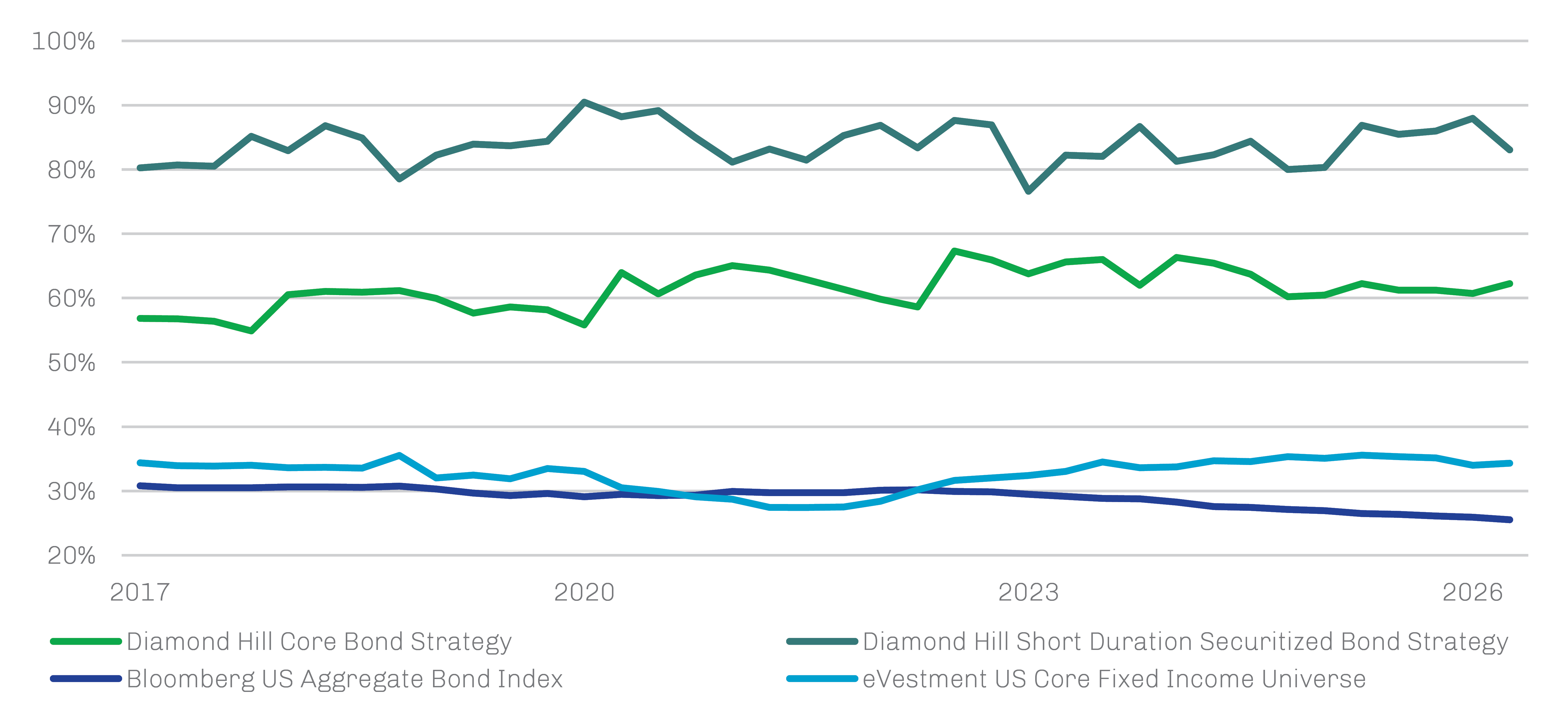
A portfolio’s allocation at a single point in time reveals little about how a manager deploys capital across market segments; rather, a more meaningful measure of commitment to the securitized market is the manager’s allocation over the long term. That history can help distinguish between a “resident” who invests consistently through market cycles and a “tourist” who moves in and out as valuations or the macroeconomic outlook changes.
Neither approach is wrong. But oftentimes in securitized markets, value often emerges over time—not during a brief visit. As shown in Exhibit 3, Diamond Hill’s portfolios have maintained consistently large exposures to securitized assets over time.
Exhibit 3. Diamond Hill’s Securitized Exposure Represents Meaningful Differentiation
Average Allocation to Securitized Assets, March 2017 through June 2026
Source: Diamond Hill, eVestment, Bloomberg; data as of June 30, 2026.
As investors increasingly recognize the potential benefits of securitized assets, clients may be better served by managers who have treated the asset class as a meaningful portfolio allocation for decades, not merely as a tactical trade. The securitized market has expanded into new areas, many of which emerged from the global financial crisis, while continuing to grow in scale and complexity. Navigating this evolving opportunity set requires seasoned investors who can identify dislocations and allocate capital when compelling opportunities arise.
Experience across multiple market cycles—including the global financial crisis, the European debt crisis, the volatility surrounding Covid-19 and shorter periods of market stress—can be especially valuable for clients still developing their understanding of the securitized market. Managers who have invested through these environments bring perspective that can help distinguish temporary disruption from durable opportunity.
Finding Relative Value in Securitized Markets
For an asset manager focused on relative value and bottom-up security selection, securitized sectors can be particularly compelling. Whether these markets receive less investor attention, involve more complex underlying collateral or represent a sizable opportunity set, they can offer meaningful potential for differentiation from the Bloomberg US Aggregate Bond Index while maintaining a comparable risk profile.