


Macro & Market Views
Energy Transition: The Long and Winding Road
Energy Transition: The Long and Winding Road
Key Takeaways

Energy transitions historically have been very long-duration events, and there’s no evidence to suggest the current transition from carbonbased fuels to renewable energy sources will be any different.
As global energy consumption continues to expand with population growth and increased economic activity, especially in developing economies, the world will require greater supplies of both traditional and renewable forms of energy.
Despite the advancements in renewable energy technologies and rapid growth of capacity over the past decade, much work and investment is needed before renewables become a large-scale, economically viable substitute for fossil fuels.
Energy-market dynamics suggest a longer runway for fossil-fuel demand and a more crucial role for traditional energy companies than may be reflected in the financial markets.
Fossil fuels like coal, oil and gas are the largest contributors to GHG emissions, and the effort to replace these carbon-based energy sources with renewable alternatives is viewed by many as the primary path to a cleaner future. It also is viewed by many as heralding the inevitable demise of businesses across the legacy energy value chain. Given both historical trends and contemporary considerations, however, we believe the future of global energy supply and demand is likely to be far more nuanced than many appreciate and that fade risk for traditional energy companies may be mispriced as a result.
Energy transitions take time, and the staggering scale and complexity of the global shift toward renewable energy sources seems to represent an epochal event likely to occur slowly over the course of many decades. And then there’s the price tag: One consultancy estimated it would cost around $275 trillion to get the world to “net zero” by 2050, and the recent increase in the cost of capital has further complicated the financing of these projects.1
In short, there are no quick fixes here, and fossil fuels likely will be needed to help meet energy demand for decades to come—to the potential benefit of, in First Eagle’s view, certain well-positioned legacy energy businesses in possession of scarce, vital assets. This includes majors that are the primary suppliers of liquified natural gas, like Shell and ExxonMobil; midstream companies with infrastructure essential to the processing, transportation and storage of oil, gas and natural gas liquids, such as ONEOK and Enterprise Products Partners; and service businesses helping to maximize productivity, detect and minimize methane emissions, and equip the energy industry with the latest emerging technologies, including SLB and NOV.
Change Comes Slowly
A multidecade effort by the United Nations to spur concrete intergovernmental action on climate change culminated in the 2015 Paris Agreement. More than 190 countries formally committed to reducing GHG emissions such that the global temperature would increase by no more than 2°C from pre-industrial levels, while aspiring to the even more ambitious 1.5°C.2 In addition, many of these countries—including China, the US and India, which are the world’s three largest emitters—have set “net-zero” target dates by which they intend to offset all human caused GHG emissions with an equivalent amount of carbon removal.3
While these and subsequent actions—including the progress made at the most recent UN Climate Change Conference (COP28) held in December 2023 in Dubai— are intended to create a shared urgency to replace fossil fuels with low-carbon alternatives, the data tell a different story. According to some estimates, current government policies suggest that aggregate fossil fuel production in 2030 will be 110% higher than the amount consistent with a 1.5°C warming cap and 69% higher than would be consistent with 2°C warming.4 Moreover, global coal production is expected to increase until 2030 and global oil and gas production until at least 2050.5 This disconnect highlights the many challenges facing the energy transition and the coalition of public and private interests seeking its implementation.
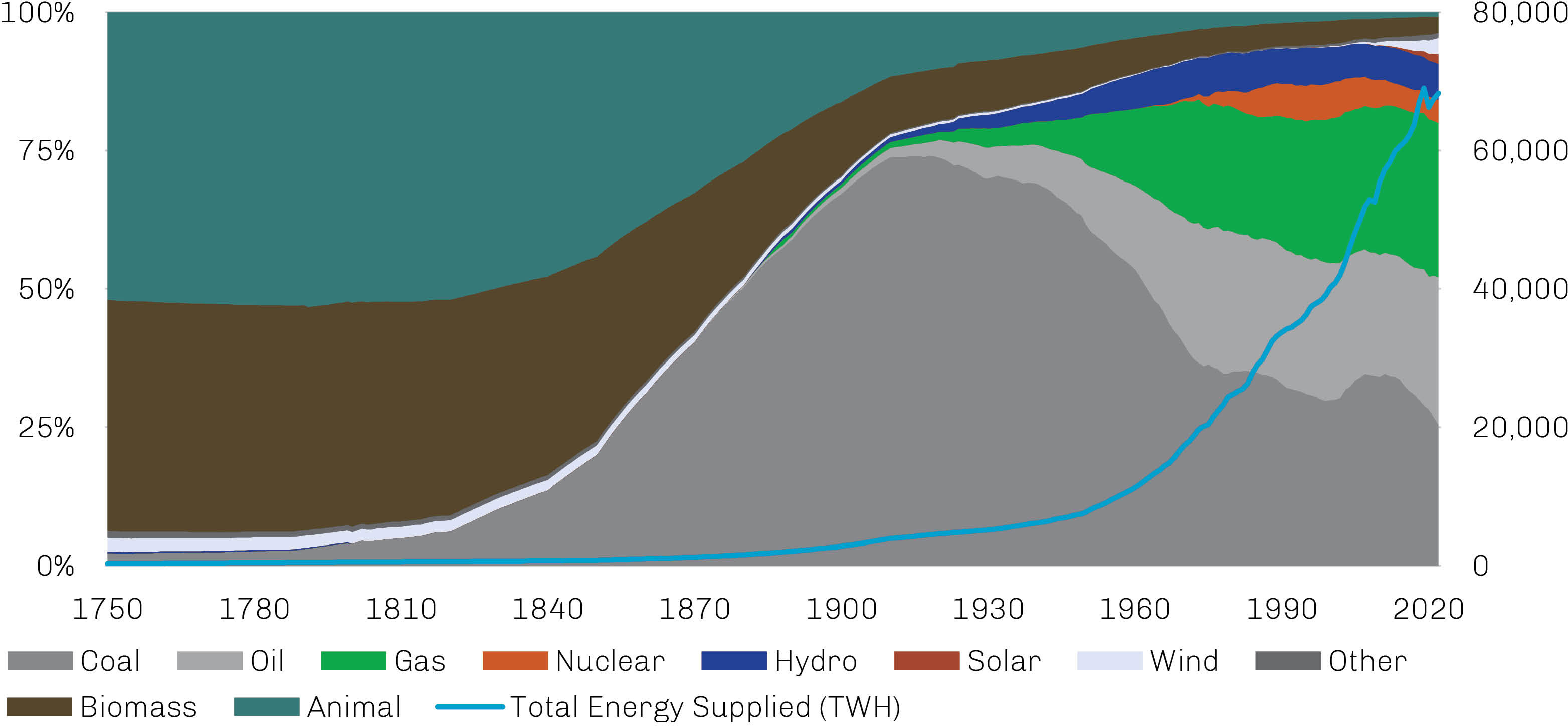
It also serves as a reminder that energy transitions historically have taken place over very long time periods, as shown in Exhibit 1. Throughout history, energy use has migrated toward sources that offered the best combination of access, efficiency and cost. Prior to the Industrial Revolution, wood fueled the world. After mining improvements in the mid-1700s resulted in lower prices and easier availability of coal, which is far more energy-dense than wood, it took more than 100 years for coal to surpass wood as the largest source of energy globally. Oil was heralded as superior to coal by the early twentieth century—again, due to its greater energy density—but decades elapsed before global demand for oil surpassed that for coal.
Exhibit 1. The Adoption of New Energy Sources Historically Has Been a Slow Process
Global Energy Supply by Source as a Percentage of Total, 1770 through 2021
Source: Thunder Said Energy, BP Statistical Review, Vaclav Smil; data as of December 31, 2021.
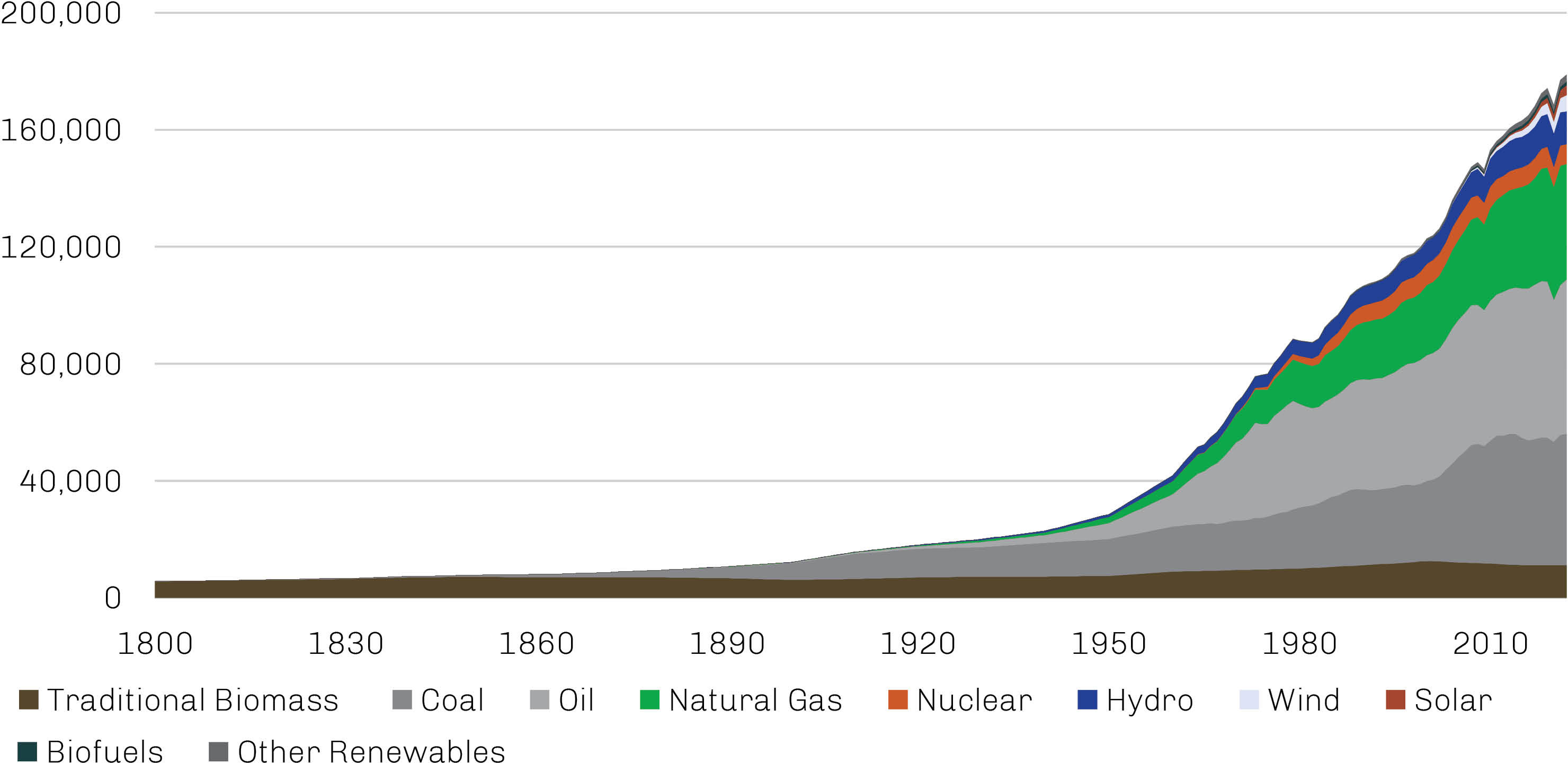
It’s also important to note that during this multi-century period, global aggregate energy demand (the blue line in Exhibit 1) grew rapidly, driven by an expanding population and rising living standards. This lifted absolute levels of demand for all forms of energy—including such legacy sources as coal—even as the global energy mix shifted. The absolute growth in all forms of energy is isolated in Exhibit 2. If history is any guide, demand for fossil fuels is likely to grow on an absolute basis even as renewables gain share.
Exhibit 2. Despite Mix Shifts, the Total Amount of Fossil Fuels Consumed Has Continued to Rise
Global Energy Consumption by Source in Terawatt Hours, 1800 to 2022
Source: Energy Institute, Vaclav Smil, Our World in Data; data as of December 31, 2022.
Renewables Have Big Shoes to Fill
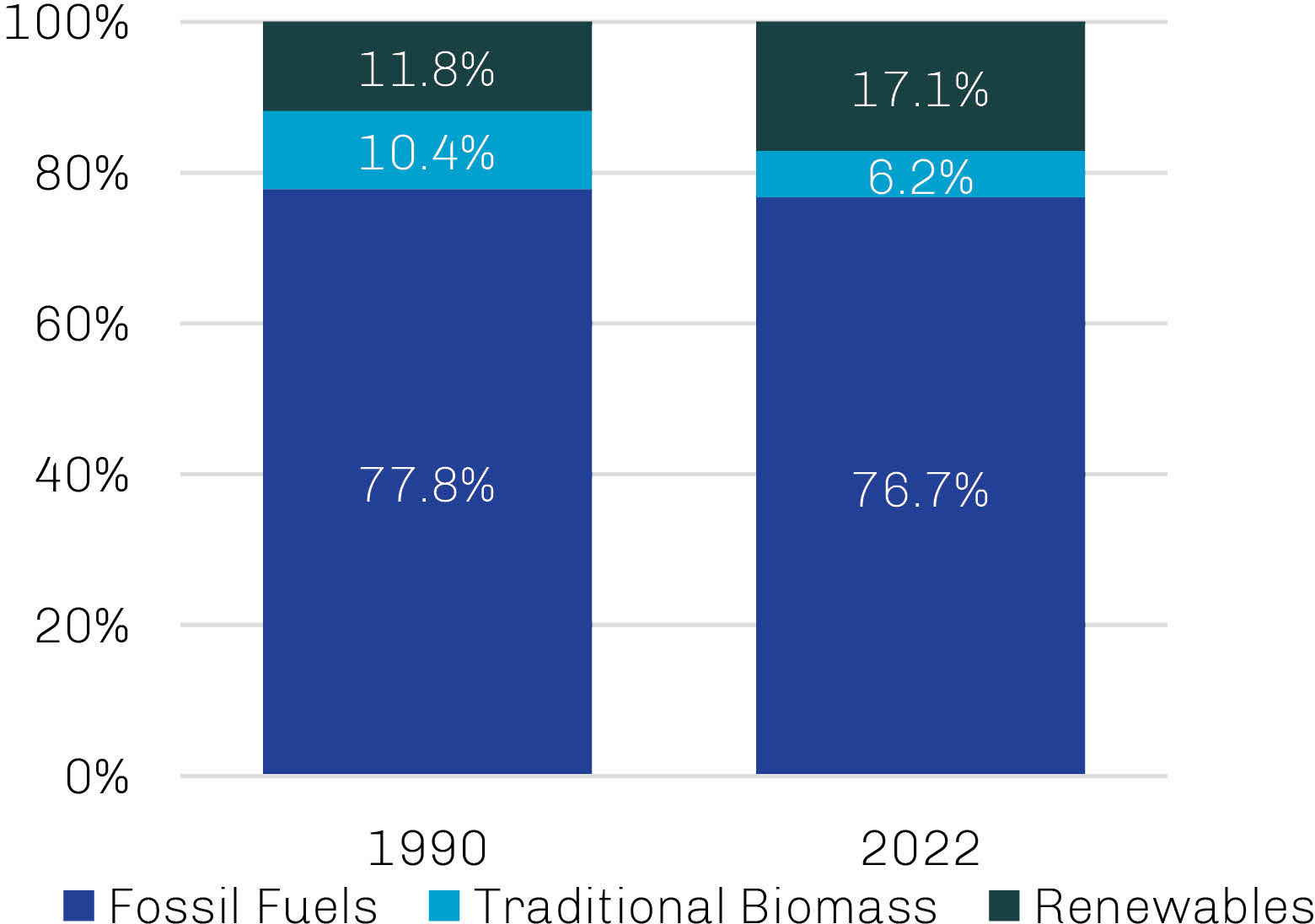
Those anticipating a rapid phase-out of fossil fuels may be surprised to learn that they still account for approximately 77% of global primary energy consumption today, excluding traditional biomass like wood and animal waste; as displayed in Exhibit 3, this figure is roughly the same as it was 30 years ago despite the rapid growth of renewable energy capacity over the past decade. While the primary source mix of future consumption is uncertain, there are a number of reasons to believe there will be a substantial ongoing need for carbon-based fuels alongside renewables, including shifting global demographics, country-level concerns about the affordability and security of energy supply, and technological limitations.
Exhibit 3. Fossil Fuels Remain the Mainstay of Energy Consumption
Global Energy Consumption by Source as a Percentage of Total
Source: Energy Institute, Vaclav Smil, Our World in Data; data as of December 31, 2022.
Shifting demographics
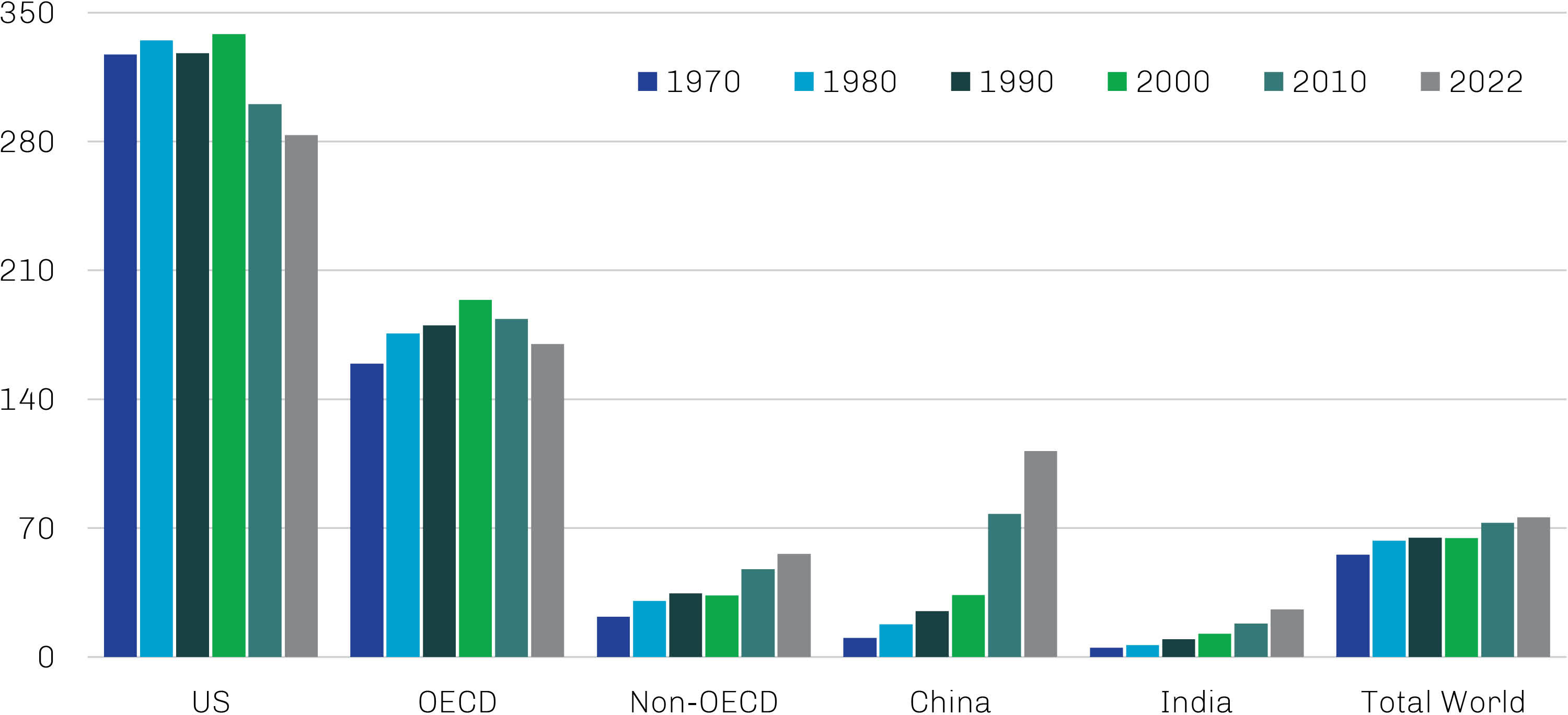
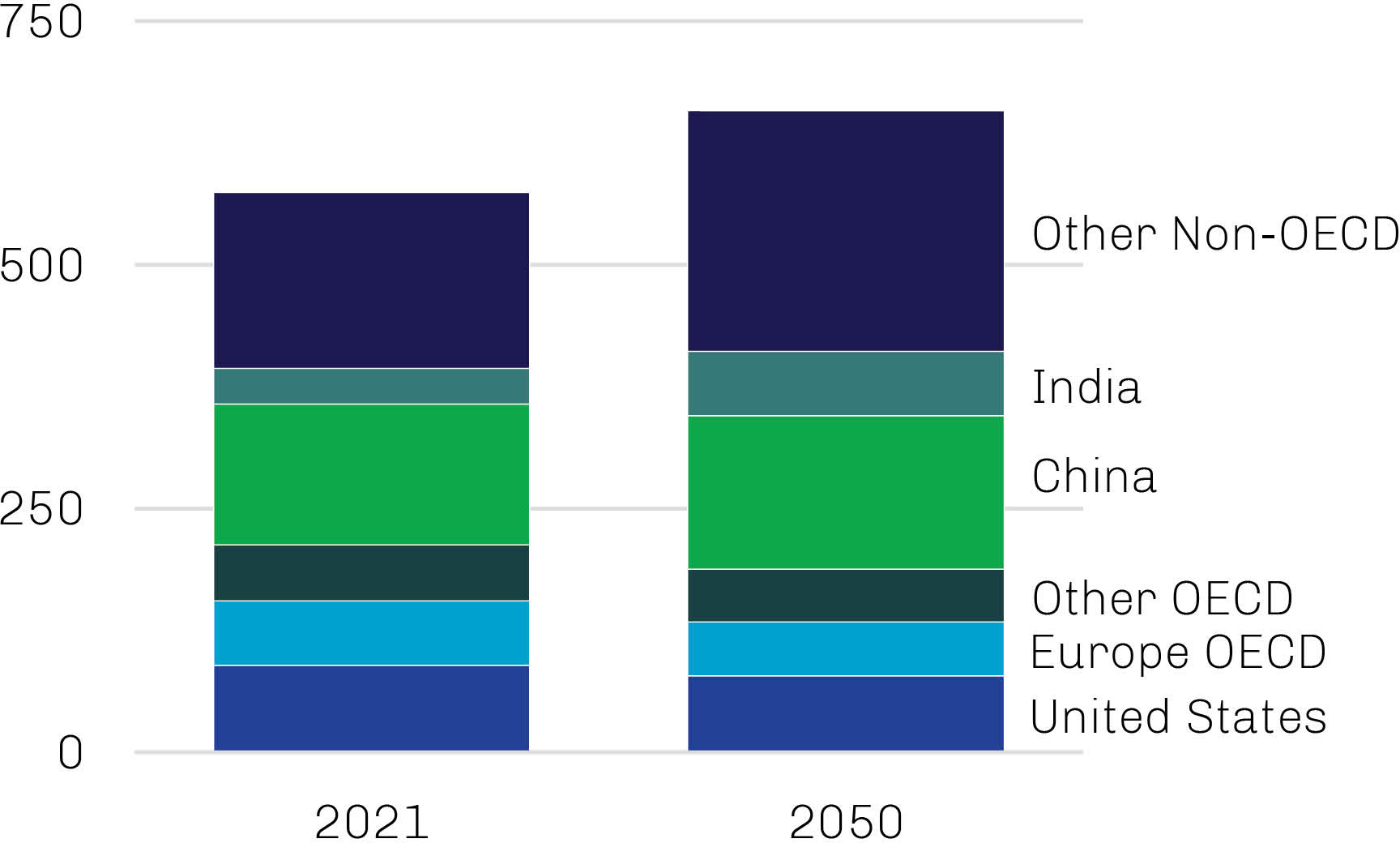
While it is often noted that energy demand per capita is declining in the world’s advanced economies in conjunction with gains in energy efficiency and stagnant population growth, this impact is forecast to be more than offset by gains in the developing world. The 36 member states of the Organisation for Economic Co-operation and Development (OECD), a proxy for advanced economies, account for 1.4 billion people, or just 18% of the world’s total population.6 The non-OECD countries containing the other 6.6 billion people have both growing populations and aspirations to improve their living standards, as reflected by increased energy use per capita illustrated in Exhibit 4. As a result, emerging markets are expected to account for more than 100% of the forecasted increase in global energy consumption, as shown in Exhibit 5.
Exhibit 4. Developing Economies Have Driven Gains in Per Capita Energy Consumption…
Energy Consumption in Gigajoules per Capita
Source: Statistical Review of World Energy, First Eagle Investments; data as of December 31, 2022.
Exhibit 5. …And Are Expected to Promote Global Demand Growth
Energy Consumption in Quadrillion BTUs
Source: ExxonMobil; data as of August 28, 2023.
Affordability and Security of energy supply
It seems likely this demand dynamic will have implications for the mix of primary energy sources consumed going forward. The rapid rise in living standards in today’s advanced economies was propelled by massive quantities of cheap, abundant energy, and it is not surprising to see emerging economies try to leverage that same advantage as they seek to drive their own economic ascensions.
Historically, national energy policies have prioritized security and affordability, with environmental externalities considered only after these imperatives were met. Countries with abundant domestic supplies of fossil fuels, fully allocated costs and ready availability present a compelling case in favor of carbon-based fuel consumption. For example, China’s simultaneous pursuit of domestic electric vehicle penetration and thermal coal expansion is best explained not by environmental considerations but by the quest for energy independence by a nation that is both the world’s largest importer of oil and its largest producer of coal. India in 2020 committed to sourcing 50% of its power from renewables by 2070 while simultaneously auctioning new tracts of land for coal mining, which at capacity would boost the nation’s output of the highest-GHG-emitting fuel by more than 30%.7
In aggregate, low- and lower-middle-income countries—many of whom already face limited access to reliable and affordable energy alongside other pressing issues, like food insecurity, that could be exacerbated by the rising energy costs that may accompany a premature disruption of fossil-fuel production—account for 40% of the world’s population but only 7% of its annual spending on clean energy.8 And while efforts are at hand to mobilize international public and private investment for the clean-energy transition in these countries, the hurdles are significant and have become even more challenging as the cost of capital has normalized, making an acceptable return harder to achieve.
Technological limitations
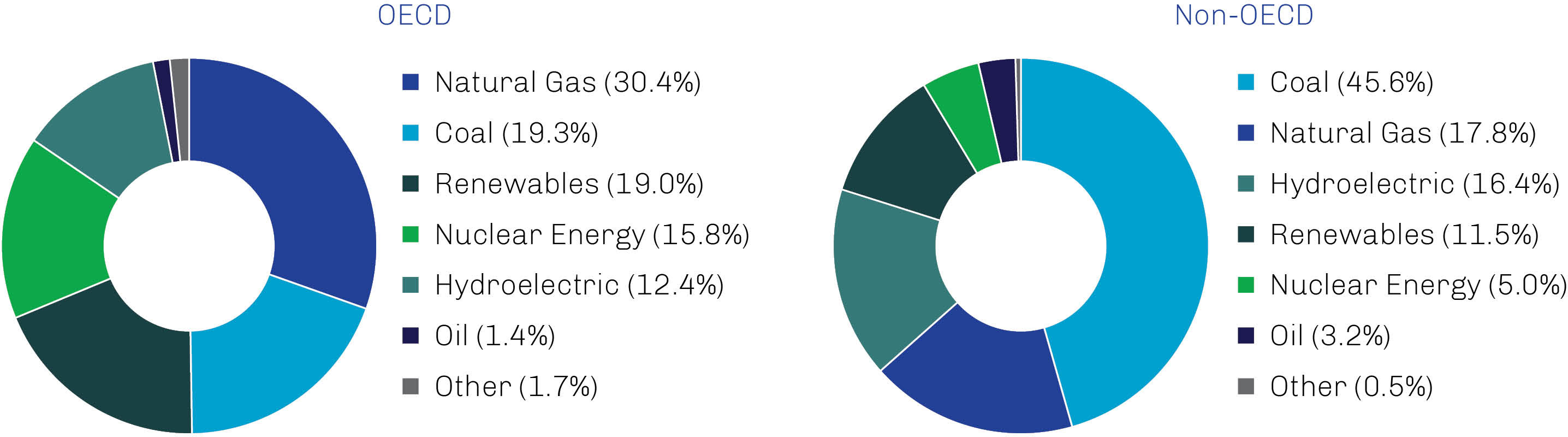
Electrification—that is, replacing equipment powered by fossil fuels, like internal combustion engines, and gas boilers with electric equivalents—is among the key strategies to reducing GHG emissions. As shown in Exhibit 6, fossil fuels, with an emphasis on relatively clean natural gas, today generate approximately 50% of the electricity used in OECD countries, whereas non-OECD countries generate about 67% of their electricity from dirtier carbon-based fuels like coal.
Exhibit 6. Fossil Fuels Continue to Drive Electricity Generation
Electricity Generation by Fuel as a Percentage of Total in 2022
Source: Energy Institute; data as of December 31, 2022.
Even as advancements in clean electrification enable renewables to carry a heavier load, limited storage technology and transmission capacity are likely to constrain their near-term impact. Capture and back-up power solutions are still needed to address intermittency—that is, harnessing and storing inconsistent supplies of renewables like sunlight and wind. Additionally, current transmission infrastructure is woefully inadequate in many countries; renewable power awaiting connection to US power grids, for instance, is nearly double the current capacity.9
While the resolution of these issues is likely to promote steadily increasing penetration of electricity in applications like light vehicles and residential and commercial heating, there are other applications without practical substitutes for carbon-based fuels. For example, decarbonization efforts lag for industrial emissions, buildings and commercial transport like heavy trucking, aviation and shipping, while there is no substitute today for hydrocarbons used as feedstock in the manufacture of chemicals, fertilizers and glass.
Fade to Green
Even with a greener future seemingly on the horizon, there are many reasons to believe the runway for fossil-fuel demand may be longer than generally acknowledged, including demographic and economic growth in developing countries, technological limitations, and concerns over energy security and affordability. While renewables appear likely to continue capturing share of overall energy demand growth, an ongoing need for traditional fuels seems equally likely. For this reason, select legacy energy companies may present potentially attractive investments to the extent that they embody a key attribute we seek at First Eagle: underappreciated resilience.