Blog hero image

BLOGThe Bird's Eye View

Timely Perspectives, Unconventional Thinking 

We’re excited to share timely market insights, thoughtful perspectives and expert commentary as part of our commitment to providing modern investment solutions to modern challenges.

Blog hero image

BLOGThe Bird's Eye View

Timely Perspectives, Unconventional Thinking 

We’re excited to share timely market insights, thoughtful perspectives and expert commentary as part of our commitment to providing modern investment solutions to modern challenges.

Staying Selective as Deal Volumes Decline

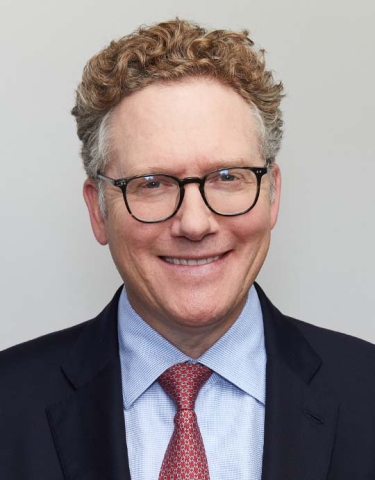
Senior Managing Director and Chief Investment Officer of Direct Lending, Napier Park Global Capital

Direct lending deal volume slowed to a three-year low during the third quarter, as leveraged buyout (LBO) and add-on merger and acquisition (M&A) activity were both weak; at $152 billion year-to-date, volume is running 31% short of 2025’s pace.1

Additionally, some of the margin expansion within the core and upper middle markets from the first half of 2026 made its way to the lower middle market, where spreads widened by 11 basis points in the quarter. While core and upper middle market spread expansion was likely driven by software exposure—which continued to see the most default activity—we believe the widening of lower middle market spreads reflected a general market correction of the underpriced illiquidity premium for smaller borrowers. Spread per turn of leverage, in contrast, narrowed to its lowest level since August 2025.2

Covenant-lite structures accounted for 17% of direct lending deals through third quarter 2026—up from 14% in 2025—concentrated in the upper middle and large cap markets; cov-lite structures represented less than 3% of deal flow in core and lower middle market loans. Lower middle market default rates over the past 12 months, at 1.8% by dollar amount and 1.5% by deal count, declined since last quarter and remain below 2025 levels.3

Despite the recent rate increase, we anticipate that deal flow could continue to improve through year end, allowing for deployment in an attractive yield environment. We remain focused on selectivity as we evaluate opportunities across industries and subsectors. However, we are skeptical of market lending trends—such as data centers—as we continue to target essential service businesses, which we believe are more insulated from artificial intelligence (AI). We have also pulled back slightly on healthcare given longer hold periods within certain subsectors, and we continue to be cautious on software.

1 Source: KBRA DLD Research; data as of October 14, 2026.
2 Source: KBRA DLD Research; data as of October 14, 2026.
3 Source: KBRA DLD Research; data as of October 14, 2026.

The information contained in this material is provided by First Eagle Investment Management, LLC (“FEIM”) and its global subsidiaries (collectively, “First Eagle”). FEIM is an investment adviser registered with the US Securities and Exchange Commission (SEC). Registration with the SEC does not imply a certain level of skill or training.

This material is for informational purposes only and reflects prevailing conditions and the judgment of the author(s) as of the date of publication, all of which are subject to change. This material should not be relied upon as investment advice; it does not constitute a recommendation to buy or sell a security or other investment; and it is not intended to predict or depict the performance of any investment. This material is not being provided in a fiduciary capacity and is not intended to recommend any investment policy or investment strategy or consider the specific objectives or circumstances of any investor. We consider the information in this material to be accurate, but we do not represent that it is complete or should be relied upon as the sole source of appropriateness for investment.

Prospective investors should inform themselves and consult with an investment, tax or legal professional as to any applicable legal requirements, taxation and exchange control regulations in the countries of their citizenship, residence or domicile that may be relevant prior to investing.

THIS MATERIAL DOES NOT CONSTITUTE AN OFFER OR SOLICITATION IN ANY JURISDICTION WHERE OR TO ANY PERSON TO WHOM IT WOULD BE UNAUTHORIZED OR UNLAWFUL TO DO SO.

All investments involve the risk of loss of principal.

Alternative investments can be speculative and are not suitable for all investors. Investing in alternative investments is only intended for experienced and sophisticated investors who are willing and able to bear the high economic risks associated with such an investment. Investors should carefully review and consider potential risks before investing. Certain of these risks include:

  • Loss of all or a substantial portion of the investment;
  • Lack of liquidity in that there may be no secondary market or interest in the strategy and none is expected to develop;
  • Volatility of returns;
  • Interest rate risk;
  • Restrictions on transferring interests in a private investment strategy;
  • Potential lack of diversification and resulting higher risk due to concentration within one or more sectors, industries, countries or regions;
  • Absence of information regarding valuations and pricing;
  • Complex tax structures and delays in tax reporting;
  • Less regulation and higher fees than mutual funds;
  • Use of leverage, which magnifies the potential for gain or loss on amounts invested and is generally considered a speculative investment technique and increases the risks associated with investing in the strategy;
  • Carried interest, which may cause the strategy to make more speculative, higher risk investments than would be the case in absence of such arrangements; and
  • Below-investment-grade loans, which may default and adversely affect returns.

Strategies whose investments are concentrated in a specific industry or sector may be subject to a higher degree of risk than funds whose investments are diversified and may not be suitable for all investors.

Past performance does not guarantee future results, which may vary. The value of investments and the income derived from investments will fluctuate and can go down as well as up. A loss of principal may occur.

Direct lending refers to a loan agreement negotiated between a borrower and single or small group of nonbank lenders. Direct lending can also be referred to as “private credit” or “private lending.”

A leveraged buyout (LBO) is the acquisition of one company by another using a significant amount of borrowed capital to meet the cost of acquisition.

The information presented does not reflect the performance of any fund, strategy or account managed or serviced by First Eagle, and there is no guarantee that investors will experience the type of performance reflected. There is no guarantee that any market forecast set forth in this material will be realized. There is no guarantee that any historical trend referenced herein will be repeated in the future, and there is no way to predict precisely when such a trend will begin. The mention of specific securities is not a recommendation or solicitation to buy, sell or hold any particular security and should not be relied upon as investment advice.

Availability of the products or services described may be restricted by law in certain jurisdictions. This material may not be distributed, published or used by any person or entity in any jurisdiction or country where such distribution or use would be contrary to local law or regulation.

United Kingdom

Napier Park Global Capital, Ltd. is authorised and regulated by the Financial Conduct Authority (FRN: 541427) in the United Kingdom.

Middle East

This material is for information purposes only and has not been, and will not be, registered with or reviewed or approved by any regulator located in the Middle East. It does not constitute or form part of any marketing initiative, any offer to issue or sell, or any solicitation of any offer to subscribe to or purchase, any products, strategies or other services, nor shall it, or the fact of its distribution, form the basis of, or be relied on in connection with, any contract resulting therefrom. In the event that the recipient of this material wishes to receive further information regarding any products, strategies or other services, it shall specifically request the same in writing from an authorized financial adviser.

Canada

Pursuant to the international adviser registration exemption in National Instrument 31-103, First Eagle Investment Management, LLC. is informing you that: (i) First Eagle Investment Management, LLC. is not registered in Canada and is advising you in reliance upon an exemption from the adviser registration under National Instrument 31-103;  (ii) First Eagle Investment Management, LLC’s jurisdiction of residence is New York, USA; (iii) there may be difficulty enforcing legal rights against First Eagle Investment Management, LLC. because it is a resident outside of Canada and all or substantially all of its assets may be situated outside of Canada.

FEF Distributors, LLC (“FEFD”) (SIPC), a limited purpose broker-dealer, distributes certain First Eagle products. FEFD does not provide services to any investor but rather provides services to its First Eagle affiliates. As such, when FEFD presents a fund, strategy or other product to a prospective investor, FEFD and its representatives do not determine whether an investment in the fund, strategy or other product is in the best interests of, or is otherwise beneficial or suitable for, the investor. No statement by FEFD should be construed as a recommendation. Investors should exercise their own judgment and/or consult with a financial professional to determine whether it is advisable for the investor to invest in any First Eagle fund, strategy or product.

First Eagle Investments is the brand name for First Eagle Investment Management, LLC and its subsidiary investment advisers.

First Eagle Alternative Credit and Napier Park are brand names for the two subsidiary investment advisers engaged in the alternative credit business.

© 2026 First Eagle Investment Management, LLC. All rights reserved.

    Fiscal Follies

    Since the dislocations of Covid-19, we’ve been warning that the next crisis to face the global economy could be sovereign in nature. The selloff in long government bonds worldwide lends credence to this suspicion. In early October, the yield on 10-year US Treasury bonds rose to 5.31%, a 24-year high, from around 4.2% at the start of the year.1

    The price of gold relative to both the stock of public debt outstanding and the S&P 500 stands at or near its geometric mean since 1970, suggesting to us that investors believe the current fiscal backdrop represents a normal level of risk. We don’t share that belief.2

    Fiscal deterioration is not limited to the US, as we are seeing more political/fiscal risks in Europe. France’s borrowing rate recently hit 5% for the first time since 2002, higher than that of countries like Greece and Italy that were at the epicenter of the continent’s previous debt crisis. The rise in rates is coincidental with the government’s need to refinance low-rate debt issued during the Covid era.3


    Fiscal deterioration is not limited to the US.

    Meanwhile, China’s economy remains very weak and has been increasingly reliant on exports to buoy growth.4 With much of its domestic economy struggling, China may need to pull some fiscal levers to stimulate activity at home. At some point the Chinese are going to have to do more on the fiscal front to stimulate their economy, in our view.

    In an environment where higher yields are exacerbating fiscal challenges within the biggest macro blocks of the world, we maintain our belief that a diverse collection of scarce, durable assets at sensible valuations is likely to benefit investors in the long run.

    1 Source: US Department of the Treasury; data as of October 30, 2026.
    2 Source: Bloomberg and First Eagle Investments; data as of September 30, 2026
    3 Source: Bloomberg; data as of October 21, 2026.
    4 Source: Wall Street Journal; data as of October 18, 2026.

    The information contained in this material is provided by First Eagle Investment Management, LLC (“FEIM”) and its global subsidiaries (collectively, “First Eagle”). FEIM is an investment adviser registered with the US Securities and Exchange Commission (SEC). Registration with the SEC does not imply a certain level of skill or training.

    This material is for informational purposes only and reflects prevailing conditions and the judgment of the author(s) as of the date of publication, all of which are subject to change. This material should not be relied upon as investment advice; it does not constitute a recommendation to buy or sell a security or other investment; and it is not intended to predict or depict the performance of any investment. This material is not being provided in a fiduciary capacity and is not intended to recommend any investment policy or investment strategy or consider the specific objectives or circumstances of any investor. We consider the information in this material to be accurate, but we do not represent that it is complete or should be relied upon as the sole source of appropriateness for investment.

    Prospective investors should inform themselves and consult with an investment, tax or legal professional as to any applicable legal requirements, taxation and exchange control regulations in the countries of their citizenship, residence or domicile that may be relevant prior to investing.

    THIS MATERIAL DOES NOT CONSTITUTE AN OFFER OR SOLICITATION IN ANY JURISDICTION WHERE OR TO ANY PERSON TO WHOM IT WOULD BE UNAUTHORIZED OR UNLAWFUL TO DO SO.

    All investments involve the risk of loss of principal.

    Past performance does not guarantee future results, which may vary. The value of investments and the income derived from investments will fluctuate and can go down as well as up. A loss of principal may occur.

    The principal risk of investing in value stocks is that the price of the security may not approach its anticipated value or may decline in value.

    Investment in gold and gold-related investments present certain risks, including political and economic risks affecting the price of gold and other precious metals like changes in US or foreign tax, currency or mining laws, increased environmental costs, international monetary and political policies, economic conditions within an individual country, trade imbalances and trade or currency restrictions between countries. The price of gold, in turn, is likely to affect the market prices of securities of companies mining or processing gold and, accordingly, the value of investments in such securities may also be affected. Gold related investments as a group have not performed as well as the stock market in general during periods when the US dollar is strong, inflation is low and general economic conditions are stable. In addition, returns on gold related investments have traditionally been more volatile than investments in broader equity or debt markets. Investment in gold and gold related investments may be speculative and may be subject to greater price volatility than investments in other assets and types of companies.

    There are risks associated with investing in foreign investments (including depositary receipts). Foreign investments, which can be denominated in foreign currencies, are susceptible to less politically, economically and socially stable environments, fluctuations in the value of foreign currency and exchange rates, and adverse changes to government regulations.

    10-year Treasury yield is the interest rate paid on a US Treasury bond with a maturity of 10 years upon issuance.

    S&P 500 Index (Gross/Total) measures the performance of 500 of the top companies in the leading industries of the US economy and is widely recognized as a proxy for the US market as a whole. A total-return index tracks price changes and reinvestment of distribution income.

    Indexes are unmanaged and do not incur management fees or other operating expenses. One cannot invest directly in an index.

    The information presented does not reflect the performance of any fund, strategy or account managed or serviced by First Eagle, and there is no guarantee that investors will experience the type of performance reflected. There is no guarantee that any market forecast set forth in this material will be realized. There is no guarantee that any historical trend referenced herein will be repeated in the future, and there is no way to predict precisely when such a trend will begin. The mention of specific securities is not a recommendation or solicitation to buy, sell or hold any particular security and should not be relied upon as investment advice.

    Availability of the products or services described may be restricted by law in certain jurisdictions. This material may not be distributed, published or used by any person or entity in any jurisdiction or country where such distribution or use would be contrary to local law or regulation.

    United Kingdom

    Napier Park Global Capital, Ltd. is authorised and regulated by the Financial Conduct Authority (FRN: 541427) in the United Kingdom.

    Middle East

    This material is for information purposes only and has not been, and will not be, registered with or reviewed or approved by any regulator located in the Middle East. It does not constitute or form part of any marketing initiative, any offer to issue or sell, or any solicitation of any offer to subscribe to or purchase, any products, strategies or other services, nor shall it, or the fact of its distribution, form the basis of, or be relied on in connection with, any contract resulting therefrom. In the event that the recipient of this material wishes to receive further information regarding any products, strategies or other services, it shall specifically request the same in writing from an authorized financial adviser.

    Canada

    Pursuant to the international adviser registration exemption in National Instrument 31-103, First Eagle Investment Management, LLC. is informing you that: (i) First Eagle Investment Management, LLC. is not registered in Canada and is advising you in reliance upon an exemption from the adviser registration under National Instrument 31-103;  (ii) First Eagle Investment Management, LLC’s jurisdiction of residence is New York, USA; (iii) there may be difficulty enforcing legal rights against First Eagle Investment Management, LLC. because it is a resident outside of Canada and all or substantially all of its assets may be situated outside of Canada.

    FEF Distributors, LLC (“FEFD”) (SIPC), a limited purpose broker-dealer, distributes certain First Eagle products. FEFD does not provide services to any investor but rather provides services to its First Eagle affiliates. As such, when FEFD presents a fund, strategy or other product to a prospective investor, FEFD and its representatives do not determine whether an investment in the fund, strategy or other product is in the best interests of, or is otherwise beneficial or suitable for, the investor. No statement by FEFD should be construed as a recommendation. Investors should exercise their own judgment and/or consult with a financial professional to determine whether it is advisable for the investor to invest in any First Eagle fund, strategy or product.

    First Eagle Investments is the brand name for First Eagle Investment Management, LLC and its subsidiary investment advisers.

    First Eagle Alternative Credit and Napier Park are brand names for the two subsidiary investment advisers engaged in the alternative credit business.

    © 2026 First Eagle Investment Management, LLC. All rights reserved.