BLOGThe Bird's Eye View
Timely Perspectives, Unconventional Thinking
We’re excited to share timely market insights, thoughtful perspectives and expert commentary as part of our commitment to providing modern investment solutions to modern challenges.
BLOGThe Bird's Eye View
Timely Perspectives, Unconventional Thinking
We’re excited to share timely market insights, thoughtful perspectives and expert commentary as part of our commitment to providing modern investment solutions to modern challenges.
High Tide for Equities amid Inflation Undertow

Head of Global Value Team and Portfolio Manager
After selling off sharply in March with the outbreak of the Iran war, a number of global equity benchmarks—including the S&P 500 Index and MSCI World Index—have established new all-time highs in recent weeks. Driven by renewed enthusiasm around artificial intelligence and strong corporate earnings, equity investors appear to have adjusted to the impacts of the war.1
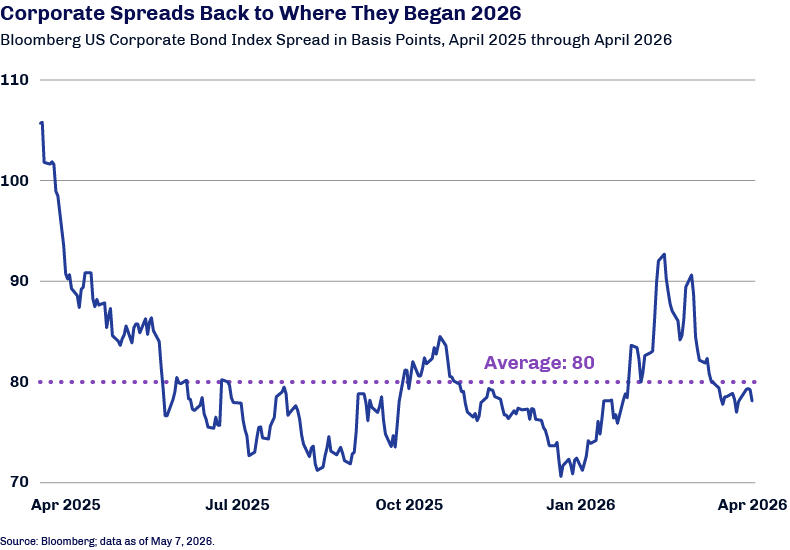
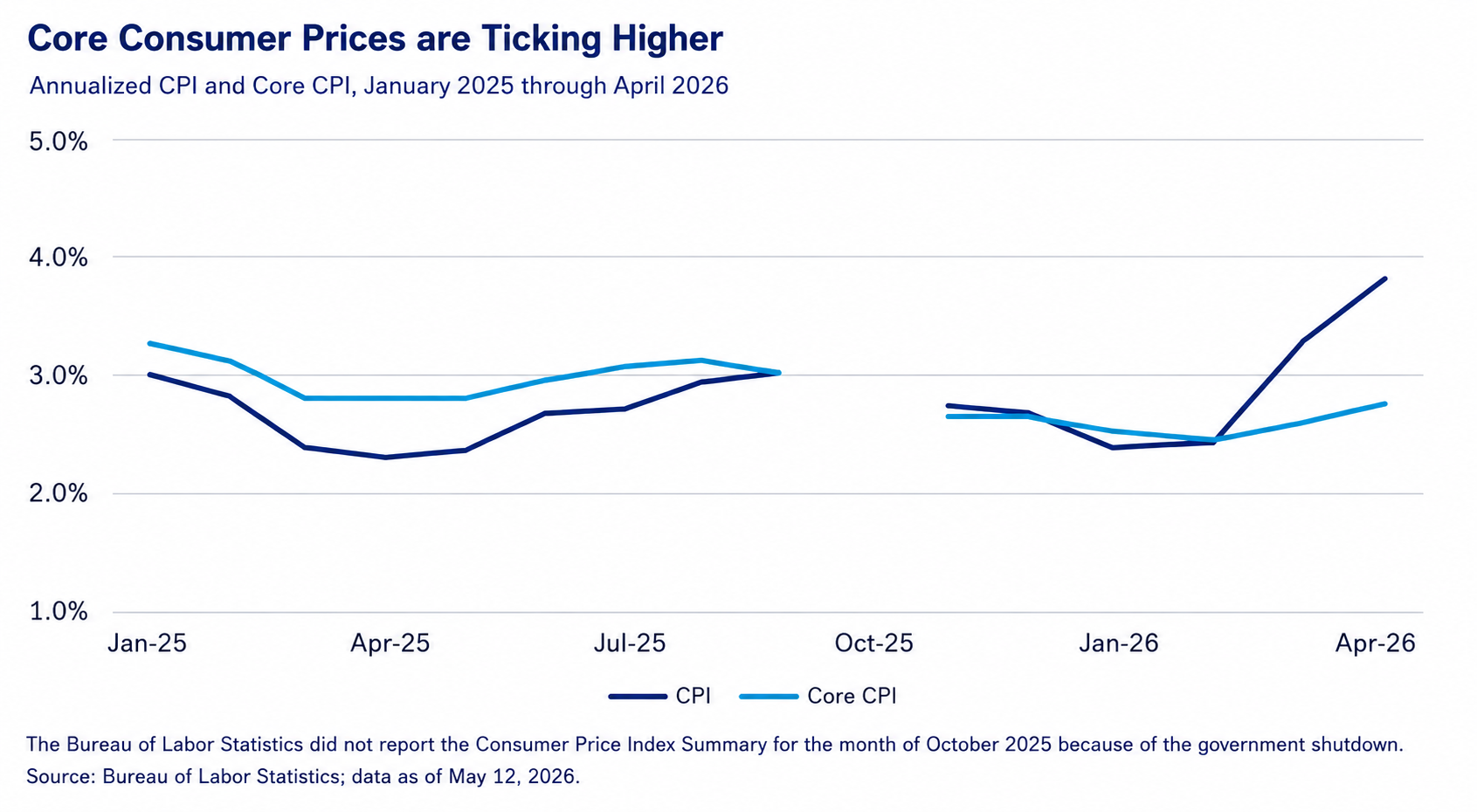
As demonstrated by the Treasury curve’s bear steepening, bond markets have been more sensitive to the deteriorating inflation dynamic—the result of the war’s energy supply shock and the very large fiscal deficits facing the US and other major economies.2 While headline inflation climbed to 3.8% in April, from 2.4% in February, higher energy and food prices have begun to seep into core readings as well; April core inflation (all items ex-food and energy) was 2.8% compared to 2.5% in February.3 Notably, bond markets have not priced in incremental credit risk, as spreads tightened back to where they were at the beginning of the year.4
This bifurcation of performance and risk perception reinforces the importance of investing in assets and businesses that can participate in nominal inflation over time. As fixed principal assets, the yield paid to investors for debt securities is fixed, as is the nominal value of the principal at maturity. While fixed principal has its merits, it also has its drawbacks, namely the inability to keep pace with inflation and pass through higher nominal prices the way assets that are fixed in supply can.
We remain skeptical that even a quick resolution in Iran would usher in a swift return to normal conditions given the damage to energy infrastructure and the need to incentivize production and development around the world. Energy prices may remain elevated for some time, in our view, with the impact continuing to diffuse across the economy. Assets able to leverage the inflationary dynamic to get better pricing may be positioned to benefit.

The war with Iran continued to dominate fixed income markets in April, with asset prices moving in conjunction with waxing and waning hopes for a swift end to the conflict. Though the month ended with the combatants in an extended cease-fire, a peace agreement has been elusive and the Strait of Hormuz remains effectively closed. Markets appeared to grow accustomed to this new normal, however, and spread assets in general delivered returns in excess of Treasuries.1
Treasuries and rates. The specter of a prolonged conflict with Iran weighed on Treasuries and sent yields higher across the curve. Given the war’s potential inflationary impact, longer-maturity bonds were the most effected; yields on 10- and 30-year Treasuries, for example, both moved to levels not seen consistently since the first half of 2025.2 Meanwhile, futures markets, which entered the year pricing in two or three fed rate cuts during 2026, now expect no policy rate action by the central bank.3
Corporate credit. Having spiked with the outbreak of hostilities with Iran, investment grade and high yield corporate spreads tightened to end-2025 levels during April as markets brushed off the challenging geopolitical environment. Both delivered strong excess returns relative to comparable-duration Treasuries.4 Corporate issuance across the credit spectrum remained robust during the month and is running more than 28% higher compared to year-to-date 2025.5
Securitized credit. As they did in other credit segments, securitized credit spreads tightened throughout April. Unlike other areas of the market, however, securitized credit spreads now sit tighter than end-2025 levels. Index-level performance returned to positive territory in April, helped by shorter-duration asset-backed securities. Though not part of the Bloomberg family of indexes, collateralized mortgage obligations were the top-performing sector of the securitized market.6