


BLOGThe Bird's Eye View
Timely Perspectives, Unconventional Thinking
We’re excited to share timely market insights, thoughtful perspectives and expert commentary as part of our commitment to providing modern investment solutions to modern challenges.
BLOGThe Bird's Eye View
Timely Perspectives, Unconventional Thinking
We’re excited to share timely market insights, thoughtful perspectives and expert commentary as part of our commitment to providing modern investment solutions to modern challenges.
Securitized Assets: Looking Beyond the Benchmark

Portfolio Manager

Client Portfolio Manager
The bond market is bigger than its benchmarks. For active fixed income investors, that gap isn’t merely an interesting statistic—it can expand the opportunity set.
The US core bond universe totaled nearly $60 trillion at year-end 2025,1 while the Bloomberg US Aggregate Bond Index represented $29.2 trillion.2 Index eligibility and liquidity requirements leave meaningful portions of the market outside its boundaries, including mortgage-backed, asset-backed and commercial mortgage-backed securities. For active managers, that creates a broader hunting ground for bottom-up security selection and relative-value opportunities.
Securitized assets also offer a different risk profile than traditional corporate debt. Instead of depending on the financial health of a single company, investors gain exposure to pools of loans backed by consumers, businesses or commercial collateral. Structural credit enhancements can provide additional protection when losses exceed expectations.
Of course, complexity cuts both ways. Simply investing outside a benchmark isn’t an advantage. Understanding collateral, deal structures and how securities may behave under stress requires specialized expertise.
That is where experience matters. Securitized markets have weathered the global financial crisis, European debt crisis, Covid-19 volatility and other periods of stress. Managers who have invested through multiple cycles may be better positioned to distinguish a temporary dislocation from a durable opportunity.
Benchmarks are useful comparison tools, but they aren’t investment road maps. For investors willing to do the work, looking beyond an index’s boundaries can uncover opportunities others may simply never find.

The Shift from Efficiency to Resilience

Portfolio Manager and Senior Research Analyst
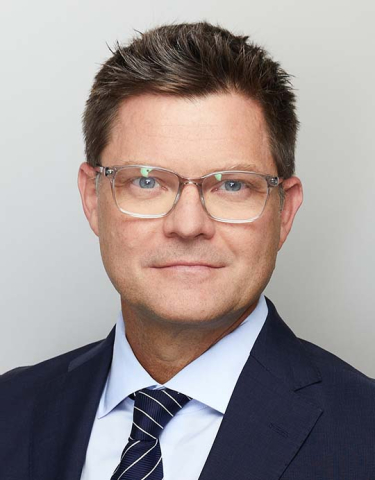
Portfolio Manager and Senior Research Analyst
For decades, Western economies maximized efficiency by pushing production to the lowest-cost locations, minimizing inventories and relying on global markets for energy, critical minerals, key intermediate components and manufactured goods. This model lifted returns as capital-light businesses became the clear winners in public equity markets. At the same time, those economies became overly reliant on distant, fragile, or potentially adversarial sources for critical inputs, exposing them to supply risks and potential trade restrictions.
The pandemic, Russia’s war in Ukraine, economic and strategic rivalry with China and disruptions in the Middle East have exposed the vulnerabilities of this system and prompted the need for strategic autonomy and self-reliance. Rebuilding resilience may entail increasing investment in defense production, semiconductors, critical minerals, battery manufacturing, energy generation, electrical grids, transportation networks and domestic industrial capacity. Artificial intelligence (AI) spending has accelerated this transition by driving demand for power, land, steel, cooling systems, chips, transformers and transmission capacity.
Despite this massive need for investment, market-cap weighted benchmarks still reflect the capital-light era. Information technology and communication services together represented roughly 46% of the S&P 500 Index, while energy, materials, industrials and real estate are approximately 14% of the index, near historical lows. Excluding industrials, real assets represent just 6% of the Index, less than the weight of Nvidia alone.1
Even as resilience becomes a strategic priority and capital flows are directed toward expanding physical capacity, not all real assets are automatically good investments. We take a selective approach, focusing on businesses with cost-competitive assets in areas where demand is strong and capacity is scarce, and which have potential for advantaged reinvestment opportunities or rational management teams that could return excess cash to shareholders.
