


BLOGThe Bird's Eye View
Timely Perspectives, Unconventional Thinking
We’re excited to share timely market insights, thoughtful perspectives and expert commentary as part of our commitment to providing modern investment solutions to modern challenges.
BLOGThe Bird's Eye View
Timely Perspectives, Unconventional Thinking
We’re excited to share timely market insights, thoughtful perspectives and expert commentary as part of our commitment to providing modern investment solutions to modern challenges.
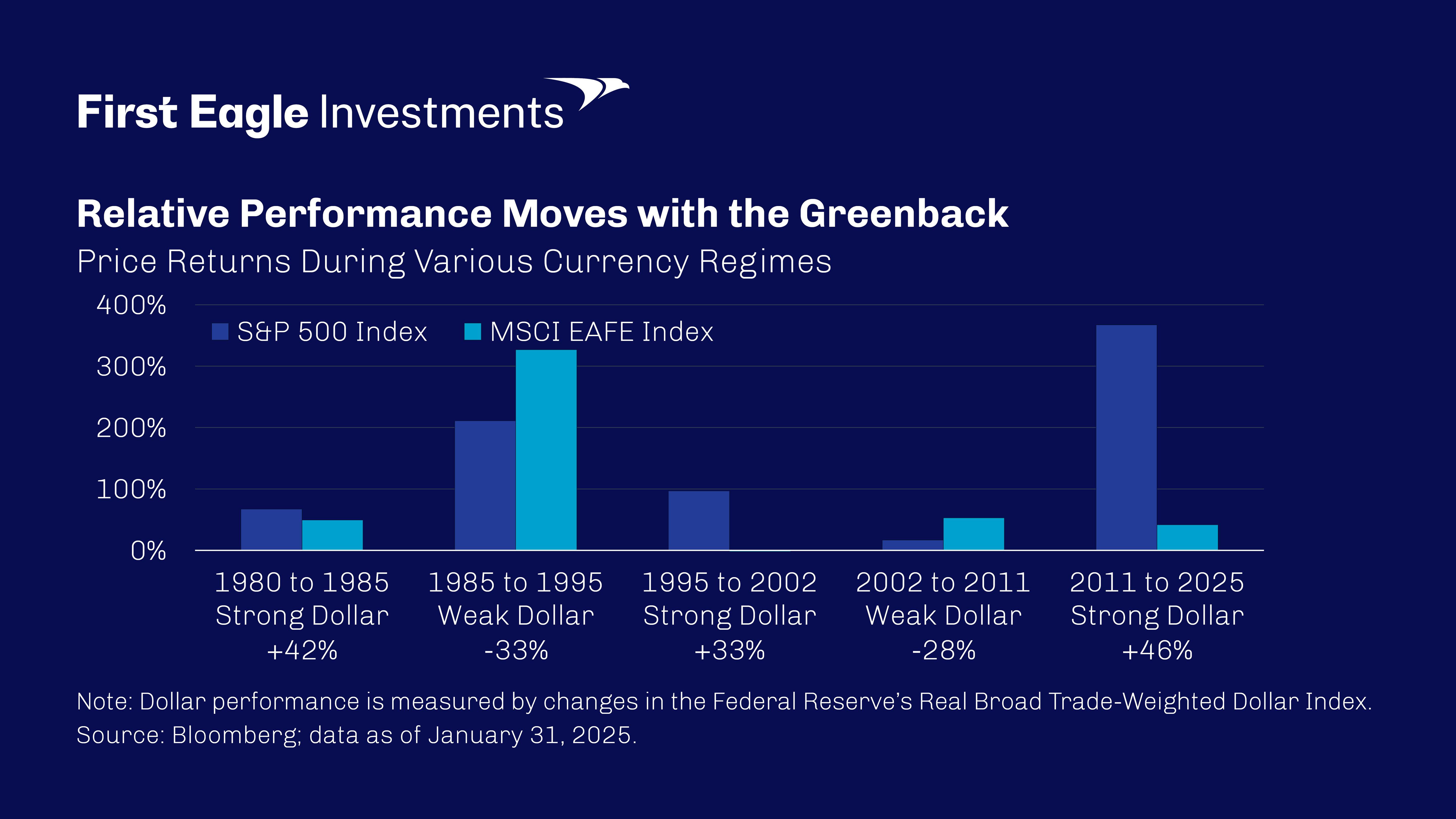
The US dollar is down roughly 11% year-to-date (YTD), marking its steepest slide in the first six months of a calendar year since the early 1970s.1 With the effects of new US policy still unfolding and the impact on growth and interest rates uncertain, many investors are turning to international markets.
International value equities are increasingly standing out. As foreign currencies like the euro and pound have rallied, earnings and dividends from international companies have become more attractive when translated back to US dollars. This currency boost, combined with historically low valuations, gives international value stocks a solid advantage.
Despite US mega-cap growth dominating headlines, performance data tells a different story. International equities began the year strong with the MSCI EAFE gaining roughly 19%, while US markets lagged, with the S&P 500 gaining around 6% YTD. After years of US outperformance, many investors saw their US allocations become a larger portion of their portfolios than intended. With a shift to international equities, investors may be increasing global exposure, signaling growing conviction in markets abroad.
Changes in Dollar Strength Have Prompted Shifts in Relative Equity Performance
Index Price Return During Various Currency Regimes, January 1980 through June 2025
Looking Beyond the Headlines in Muni Market

Head and Chief Investment Officer of Municipal Credit Team
While the barrage of policy changes early in the second Trump administration has weighed on business and consumer sentiment and injected volatility into markets, at this point we don’t see it adding a lot of incremental risk to tax-exempt municipal bond investment. If anything, the technical challenges that faced the muni bond market in the second quarter have made municipal bonds yields more attractive, especially at the longer end of the curve where much high yield issuance resides. Moreover, the recent budget reconciliation bill maintained the tax-exempt status quo for municipal bonds, removing one potential overhang.
For active, fundamental investors, the shifting political winds may create interesting opportunities to go against the grain. Take higher education, which has come under attack from the Trump administration. With the White House’s ire focused on some of the highest-profile universities in the country, nearly 6,000 other post-secondary institutions are going about their business free from that sort of elevated political risk; strong operators in the higher-education space with compelling yields may make for attractive investment opportunities.1
The shifting political winds may create interesting opportunities to go against the grain.
Hospitals are in a similar boat. The cuts to Medicaid will certainly have an impact, but $1 trillion isn’t leaving the system today; many of the reconciliation bill’s provisions phase in over several years, giving hospital operators time to adjust their business models to maintain stability and negotiate with commercial payors for higher reimbursement rates. As others tar the entire hospital sector with the same brush, opportunities may emerge in select issuers.